
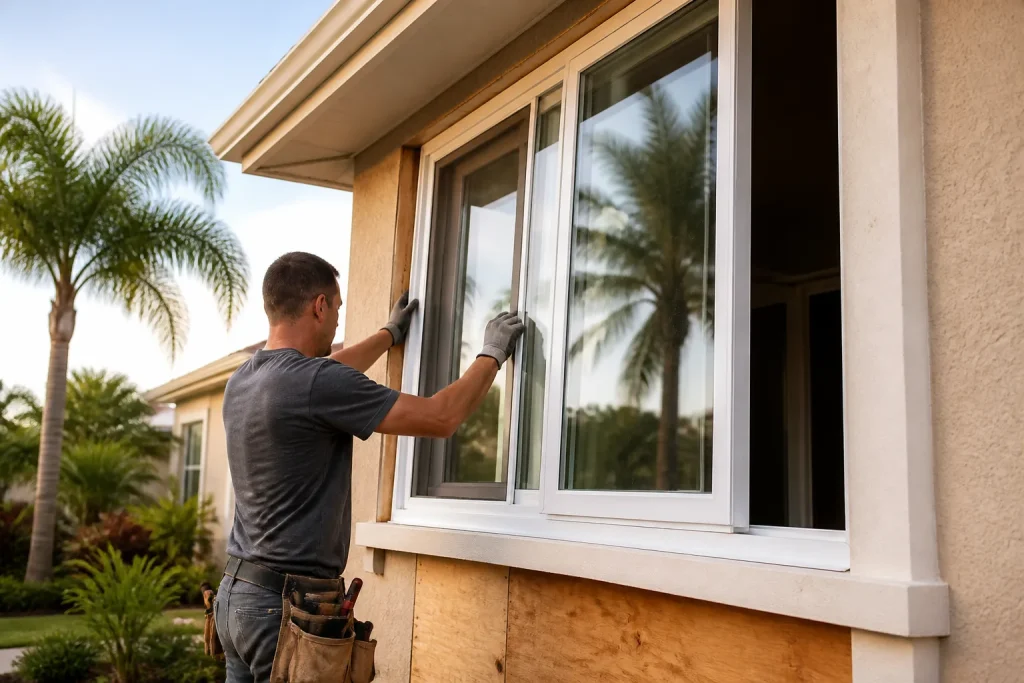
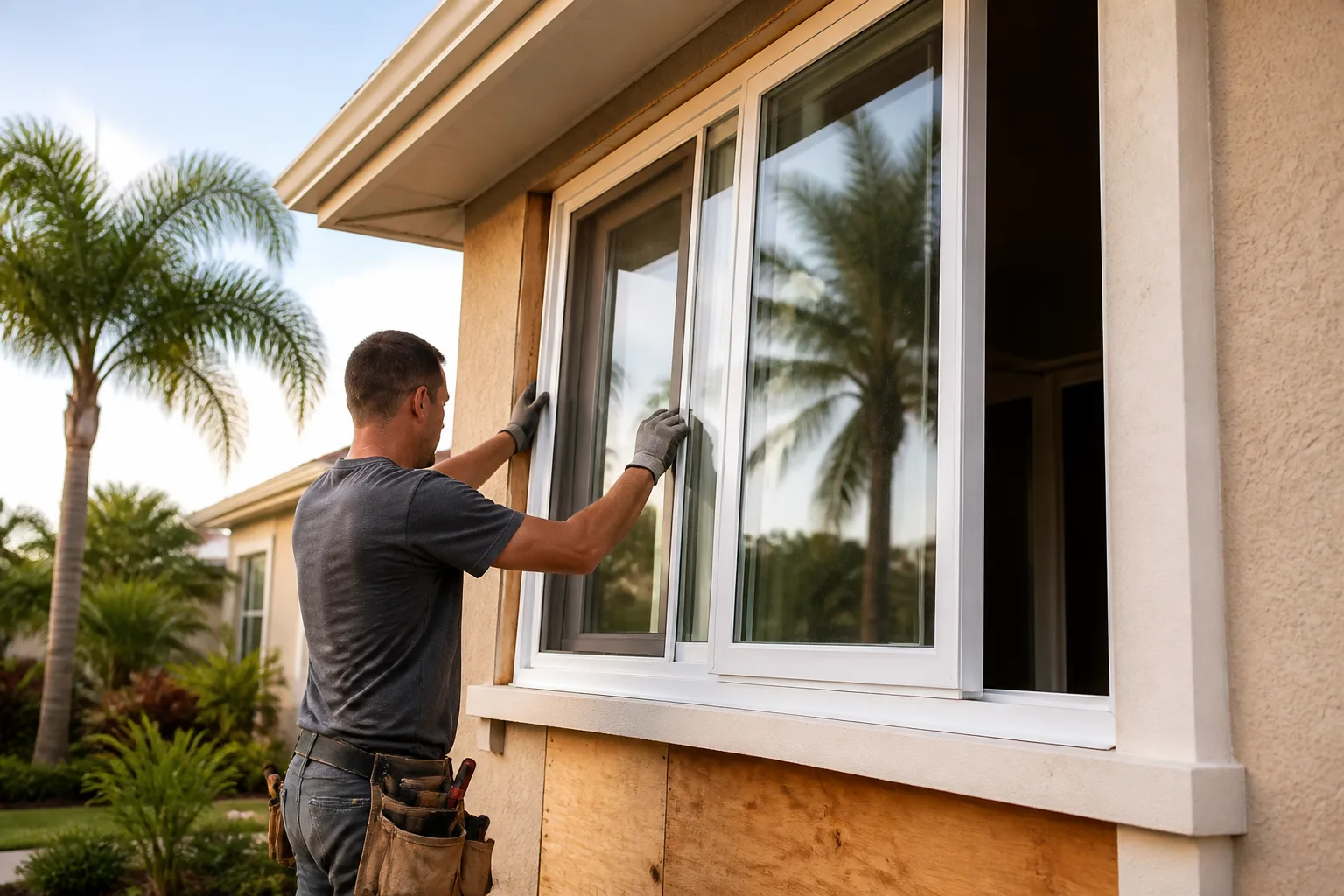
ES Windows Window Installation in Port St. Lucie: A Homeowner’s Guide
ES Windows installation in Port St. Lucie costs between $600 and $1,400 per opening for labor, with full-frame replacement running higher than insert installation. The unit itself is only half the equation. A correctly set ES window in this climate needs Florida Product Approval documentation, a proper sill pan flashing detail, and a rough opening that is plumb, level, and square within an eighth of an inch. Get those three things right and the window will perform for decades. Get any one of them wrong and you’ll be chasing problems before the first hurricane season ends. If you’d rather not sort through the details yourself, call (772) 362-3326 and we’ll walk you through it.
What Most ES Windows Installations Get Wrong in Port St. Lucie
We pulled an ES Windows unit out of a house over in Torino last month. The homeowner had lived with a fogged seal for three years, assuming it was a product defect. It wasn’t. The installer had set the frame into a rough opening that was out of square by three quarters of an inch, then shimmed the corners to make the sash close. That racked the frame just enough to destroy the thermal seal within eighteen months. ES Windows makes a solid product. The failure was in the set, not the glass.
This is the part most guides skip. They’ll tell you ES Windows are impact-rated and energy-efficient, which is true. They won’t tell you that a manufacturer warranty means nothing if the installation violates the Florida Product Approval conditions. The Notice of Acceptance, what the trades call an NOA, spells out exactly how each ES Windows model must be installed to maintain its wind-load rating and its warranty. Skip that step and you own the problem, not the manufacturer.
Two shortcuts show up on more jobs than ES Windows would like to admit. The first is skipping the NOA verification entirely. The second is setting the frame without a properly sloped and sealed sill pan. Both void the warranty. Both are invisible from the outside for the first several months. Both are preventable if you know what to look for before the crew starts.
Before we go further, understand where this fits in the broader picture of TruePane Windows & Doors home services. We install and replace windows across Port St. Lucie, and we’ve learned that the difference between a fifteen-year window and a five-year headache is rarely the brand name on the glass. It’s the person setting the frame.
Florida Product Approval and the NOA: What You Should Ask to See
Florida Product Approval is not a suggestion, and it’s not the same as a Miami-Dade County notice. Every ES Windows model sold for exterior use in Port St. Lucie carries a Florida Building Code product approval with a specific NOA number. That document lists the approved installation methods, fastener spacing, and anchoring requirements for each model and each construction type. If your installer cannot produce the NOA for the exact ES Windows series going into your openings, stop the job. That’s the first question to ask, before any glass shows up on your driveway.
In our experience, maybe one homeowner in twenty asks to see it. The rest assume the installer has it handled. Most do. The ones who skip it are the ones you’ll read about in the Google reviews three years later. A straightforward practice on our end is to have the NOA printed and set next to the quote for every ES Windows job. You should see it before work begins, not after the first window is in.
Here’s what to check on the document:
- Confirm the NOA covers the exact ES Windows series being quoted, not a similar model.
- Confirm the installation method matches your home’s construction: concrete block, wood frame, or CBS with furring strips.
- Confirm the fastener pattern and anchor spacing listed on the NOA appears in the written scope of work.
- Confirm the installer has pulled the municipal permit, because the inspector in Port St. Lucie will check the NOA during the rough inspection.
If the installer hedges on any of these, you have your answer. A good installer treats the NOA as the starting point, not a formality. For more context on how this plays into the bigger decision between repair and replacement, see our guide on Window Replacement in Port St. Lucie.
The Sill Pan Flashing Detail That Port St. Lucie Humidity Demands
Port St. Lucie gets roughly sixty inches of rain a year, much of it sideways during summer storms. Wind-driven rain finds the bottom of a window frame faster than any other entry point, and that water has nowhere to go unless the installer built it a path. The sill pan is that path. It’s a pre-formed or site-built flashing that sits under the window frame and slopes water outward, over the exterior finish, and away from the rough opening.
A missed sill pan shows up from the inside about six months later. You’ll see staining at the bottom corners of the drywall, softened baseboard, or a musty smell that comes and goes with the rain. We’ve opened walls in Port St. Lucie where the sheathing was black behind a window that looked perfectly fine from the exterior. The pan was either absent or installed flat with no slope, and the water sat against the wood until the wood gave up.
On every ES Windows installation, the sill pan needs three things: a positive slope to the exterior, end dams at both corners to keep water from running sideways into the jamb, and a back dam where the interior edge meets the rough opening. Some installers use peel-and-stick membrane folded up the sides instead of a pre-formed pan. That works if it’s done with the right laps. It fails if someone rushes it or uses the wrong material.
Ask the installer to show you the sill pan before the window goes in. If they say it’s not needed because the window has a built-in sill, they’re confusing a sloped sill on the exterior with the flashing underneath it. Two different things. One looks good from the street. The other keeps your wall dry.
This level of attention is the same standard we apply whether we’re handling ES Windows, PGT, or CGI units. The brand changes; the flashing detail doesn’t.
Reading the ES Windows Warranty Registration: Dual Layers and Why They Matter
ES Windows carries a manufacturer warranty on the glass, the frame, and the hardware. Most homeowners never read it beyond the bullet points on the brochure. The important part is what voids it, and the list is longer than you’d expect: improper anchoring, missing flashing, out-of-square openings, non-approved sealants. All installation issues. All things the manufacturer will point to when a claim comes in.
This is why dual-layer registration matters. The manufacturer registers the product warranty when the unit is sold. The installer should register their workmanship warranty separately, in writing, with stated durations. At TruePane, that’s The Keystone Standard: both manufacturer warranty layers registered in writing before the truck leaves the driveway, durations stated, no arguing about who covers what when something goes wrong. It’s backed by the 90-Day Done Right Promise on every job. If it’s not done right, we make it right. No paperwork fights, no fine print that covers neither.
Here’s what to check after installation:
- Ask for a written confirmation showing the ES Windows product warranty registration with the specific unit serial numbers.
- Ask for a separate written statement covering workmanship, with a stated duration and a phone number to call.
- Ask what happens if the sash binds, the seal fogs, or the weep holes clog within the first year. The answer tells you more than any brochure.
An installer who will not put the warranty terms on paper is planning to be hard to reach later. In Port St. Lucie, where a storm can test every window on the house in one afternoon, that’s a risky way to spend your money. Our full Window Installation in Port St. Lucie page covers the process from measure to final walkthrough.
Plumb, Level, and Square: What That Means for an ES Windows Thermal Seal
Every rough opening should be checked four ways before an ES Windows frame goes in: plumb on both side jambs, level on the sill and head, square across both diagonals, and flat across the face of the wall. Plumb and level keep the sash operating correctly. Square is what keeps the thermal seal alive.
When a frame is set into an out-of-square opening and forced to fit, the corners twist. ES Windows sashes are engineered to close against a frame that sits in a single plane. Twisting the frame puts constant pressure on the insulated glass unit, and that pressure concentrates at the corner seals. The seal fails. The argon or krypton gas between the panes leaks out. The window fogs. The thermal performance drops to roughly what a single pane of glass gives you. And the manufacturer denies the warranty claim because the unit was installed into an out-of-spec opening.
An eighth of an inch across the diagonals is the tolerance we hold. Some installers accept a quarter inch and call it close enough. It isn’t. Over a six-foot opening, a quarter-inch rack is enough to make a difference in how the sashes meet the frame, and it gets worse as the building settles.
When to call a pro: if you can hear wind at the corners of a closed window, if the sash drops when you release it, or if you see daylight around the weatherstripping, the opening may be out of square and the frame may be compromised. This is not a caulk-and-paint fix. It’s a pull-the-window-and-recheck-the-opening fix. A background-checked, uniformed technician with the right shim pattern and a digital level can tell you in twenty minutes whether the opening is workable or needs correction before new glass goes in.
The Punch-List Walkthrough: What to Check After an ES Windows Installation
Before the crew packs the truck, walk the job. A good installer expects this. A great installer hands you the punch list. Here’s what belongs on it for ES Windows specifically:
- Weep holes are clear. ES Windows frames have small drainage slots on the exterior bottom rail. Confirm they’re visible and not caulked over. A painted-over weep hole turns the frame into a water trap.
- Sash operation is even. Open and close every operable sash three times. It should move with consistent resistance, no binding at the corners, and no sag. A sash that drops when released at mid-height has a balance problem.
- Exterior caulk lines are continuous. Run a finger along the perimeter sealant. No gaps, no bubbles, no smears over the weep holes. In Port St. Lucie, the caulk line is the last line of defense against wind-driven rain.
- Interior trim sits tight. If trim was reinstalled or replaced, there should be no visible gaps against the wall or the frame. Gaps here often mean the installer shimmed after the fact to hide an out-of-plumb set.
- Locks and hardware engage fully. Every lock point should close without force, and the sash should compress against the weatherstripping when locked.
- Warranty paperwork is in your hand. Both layers. Registered. Dated. With serial numbers.
Take your time on this walkthrough. It’s the last chance to catch something before the job is closed out, and it’s much easier to fix a caulk gap on day one than to re-do a frame after the first big storm. We’ve been doing this in Port St. Lucie for years, and the punch list is where the good contractors separate from the ones who are already on the next job.
If your project also involves doors, the same standards apply. See our Door Installation in Port St. Lucie page for the punch-list specifics on entry, sliding, and impact-rated doors.
How ES Windows Compares to Other Impact Lines in Port St. Lucie
ES Windows holds its own against the better-known Florida impact brands. What we tell homeowners is that the differences between ES Windows, PGT, CWS, ECO Window Systems, and CGI matter less than the installation quality, assuming the NOA is in order and the window is properly set. Each brand has strengths. ES Windows tends to offer strong glass package options for the price. PGT has deep local distribution. CGI and CWS are built for the harsher coastal exposure. ECO Window Systems competes well on thermally broken aluminum frames.
The right question is not which brand is best. It’s which brand fits your openings, your wind zone, your budget, and which installer will set any of them correctly. We’re an authorized installer for more than a dozen manufacturer lines, including ES Windows, Andersen, Pella, Marvin, Milgard, PGT, and CGI. We quote manufacturer lines side by side on paper so you see exactly what you’re buying, with no surprise line items on the bill.
Most ES Windows installations in Port St. Lucie are completed in a single visit once the units arrive. Larger jobs or full-frame replacements take longer, but we’ll state the timeline before work starts and we’ll be there when we say. A live person answers the phone 24 hours a day, 7 days a week. Not a voicemail tree, not a callback form, not a regional call center. If the pane is not true, the job is not done.
The Bottom Line
ES Windows are a solid product for Port St. Lucie homes, but the warranty, the seal, and the storm performance all depend on the installer getting the details right. Check the NOA before work starts. Confirm the sill pan has slope and end dams. Verify both warranty layers in writing. Hold the rough opening to an eighth-inch tolerance and walk the punch list before you sign off. Do those things and you’ll get the decades of performance you paid for. Skip them and the brand name on the glass won’t save you.
If you’re in Port St. Lucie and need help, TruePane Windows & Doors offers free estimates. Call (772) 362-3326 and we’ll measure, quote, and walk you through the NOA for your openings before you commit to anything. We stand behind it.
Frequently Asked Questions
Labor for ES Windows installation in Port St. Lucie typically runs $600 to $1,400 per opening, depending on whether it’s an insert or full-frame replacement, the construction type of your home, and access conditions. Impact-rated units and larger openings push the number higher. Call (772) 362-3326 for an exact quote, estimates are free.
Yes. Any exterior window replacement in Port St. Lucie requires a municipal permit, and the inspector will check the ES Windows NOA during the rough inspection. An installer who offers to skip the permit is cutting a corner that will haunt you at resale and with your insurance carrier.
Yes, if the installation violates the Florida Product Approval conditions, the manufacturer can deny the claim. That’s why dual-layer registration matters: the manufacturer covers the product, and the installer should cover the workmanship, in writing. Ask for both before work begins.
Most single-family ES Windows installations are completed in one day for standard openings, assuming the units are in hand and the openings need no correction. Full-frame replacements and multi-opening jobs take longer, and the timeline should be stated in writing up front. Call (772) 362-3326 to schedule a free estimate and get a firm date.
Written by Dale Kessler, Owner at TruePane Windows & Doors, serving Port St. Lucie since 2008.
Need Windows & Doors Help?
Call TruePane Windows & Doors - licensed & insured, here with fast after-hours help in Port St. Lucie.
(772) 362-3326